Talent Management Strategy: How Career Growth, Manager Effectiveness, and Workplace Design Drive Retention
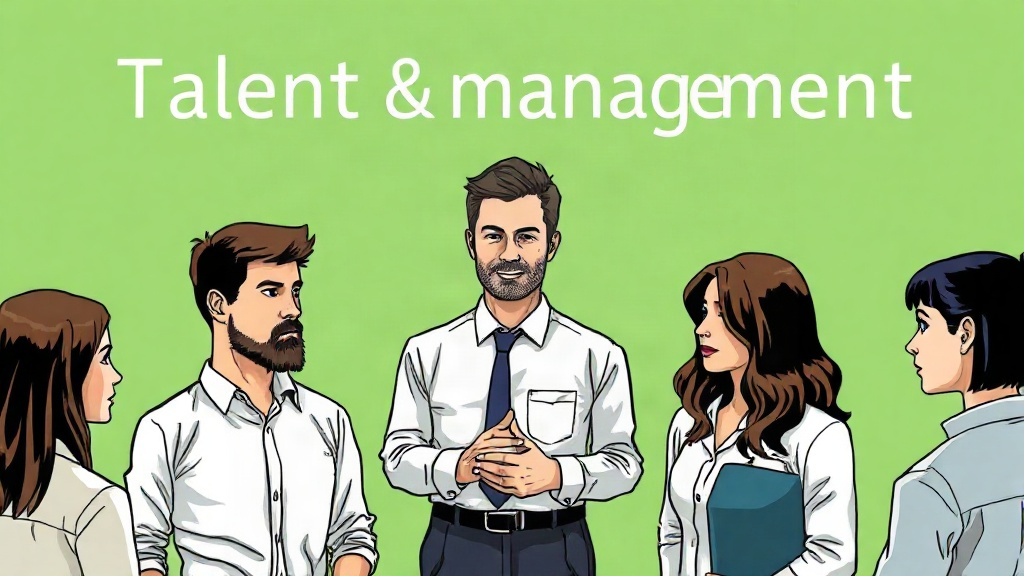
Talent management has moved well beyond recruiting, onboarding, and annual reviews. Today, the most effective organizations treat it as a connected system: the way people work, the way managers lead, and the way careers unfold all shape whether top performers stay and thrive. Three themes in recent HR conversations show where that system is under the most pressure.
Careers Are Being Built Beyond Titles
For years, promotion was the main currency of retention. Move up, earn a new title, receive a raise. That model is getting harder to sustain. Flatter structures, slower headcount growth, and shifting employee expectations mean there are simply fewer rungs to climb.
Recent discussion around high-potential talent points to a different answer: engagement is driven less by the next title and more by the quality of the work, the pace of learning, and the sense of progress. High performers want stretch assignments, cross-functional exposure, visible sponsorship, and the chance to build skills that stay valuable wherever their careers lead.
Practical ways to put this into action include:
- Lateral moves with real purpose. Rotations that broaden capability can be as motivating as a vertical step when they are framed as part of a larger development plan. - Project-based growth. Short-term assignments let employees test new strengths without waiting for an opening. - Skills-based career conversations. Ask what someone wants to be able to do in three years, not just what role they want. - Sponsorship, not just mentoring. Advocates who open doors and put names forward make a measurable difference for emerging leaders.
The Manager Effectiveness Gap
Another recurring tension is the disagreement between HR and business leaders about how well people managers are performing. Survey findings reported this week suggest the two groups often see the situation differently. HR tends to focus on capability gaps and training needs, while business leaders may judge managers primarily by results and speed.
That mismatch matters because managers are the delivery mechanism for nearly every talent strategy. Career conversations, feedback, workload balance, and recognition all happen in the manager relationship. If HR and the business define "effective" differently, development programs end up aimed at the wrong target.
Closing the gap starts with shared definitions. Agree on a short list of observable behaviors, such as coaching frequency, clarity of expectations, and quality of feedback, and measure them alongside performance outcomes. Pair that with manager enablement that is practical and timely, rather than a one-off workshop. Managers rarely resist support; they resist generic support that ignores the realities of their teams.
Workplace Design Shapes Focus and Performance
Attention has become one of the scarcest resources in knowledge work. Recent coverage on how workplace design influences concentration is a useful reminder that talent management includes the environment in which people do their jobs. Constant interruptions, noisy open layouts, and meeting-heavy calendars quietly erode the deep work that high performers value most.
Thoughtful design does not require a major renovation. It can mean:
- Creating clearly defined zones for collaboration and for quiet work. - Setting norms around meeting-free blocks and response times. - Offering flexibility so employees can choose the setting that fits the task. - Involving teams in decisions about space, since needs differ by role.
When employees can focus, they produce better work, feel more accomplished, and are less likely to burn out. That is a retention advantage that rarely shows up in a compensation benchmark.
Connecting the Pieces
These three themes reinforce one another. A talented employee who has meaningful growth opportunities but an ineffective manager will likely disengage. A strong manager who leads in an environment that fragments attention will struggle to get the best from the team. And a beautifully designed workspace cannot compensate for a stalled career path.
The organizations pulling ahead are those that audit the full employee experience rather than isolated programs. A useful starting point is to ask three questions: Do our best people see a future that does not depend solely on promotion? Do our managers have the clarity and support to develop others? Does our environment protect the focus our people need?
Honest answers to those questions can guide smarter investment, and they give talent leaders a stronger story to tell the business about why people strategy is a driver of performance, not a support function.